
Pueblo Real Estate Market Trends: What to Expect in 2026
Pueblo continues to attract attention from Front Range buyers priced out of larger metros, and that migration shapes every forecast for local housing. According to U.S. Census QuickFacts, Pueblo city recorded a population of about 111,456 residents in 2020, with steady growth since. That expanding base, combined with limited new construction around Lake Pueblo State Park and the Belmont area, suggests that supply-demand imbalances will remain central to Pueblo real estate market trends through 2026, particularly for both entry-level and mid-range single-family homes.
How is Pueblo’s housing inventory expected to shift by 2026?
Current listings across neighborhoods such as Belmont, Sunset, and Bessemer remain relatively lean compared with pre-2020 norms. According to Realtor.com, active inventory in Pueblo has recently hovered in the low hundreds, rather than the 500-plus levels seen earlier in the decade. Builders on the north side near Dillon Drive and along U.S. Highway 50 have added new product, yet lot releases remain staggered. This creates a dynamic where buyers outnumber available homes in popular school zones.
Redfin data show that as of mid-2024, Pueblo’s months of supply frequently sits near the 2 to 3-month range, based on tracking by Redfin. That level typically signals a seller-leaning environment rather than a balanced market. If higher mortgage rates keep some prospective sellers from moving, 2026 could still feature constrained resale inventory in Central High School and East High School catchments. New homes in Pueblo West may offer some relief but not enough to fully rebalance conditions.
Local planning documents from the City of Pueblo Planning and Community Development department outline several infill priorities near the Historic Arkansas Riverwalk, Union Avenue Historic District, and around Pueblo Community College. These areas are slated for mixed-use and higher-density housing that may introduce several hundred new units through 2026. Even with those additions, projected household formation tied to regional job growth suggests that vacancy rates could remain in the mid-single digits.
According to the Colorado Division of Housing’s regional analyses referenced by Colorado Department of Local Affairs, Southern Colorado markets have experienced rental vacancy rates often between 4% and 7% in recent years, a range consistent with modestly tight conditions. If Pueblo tracks similar patterns while welcoming additional residents drawn to Colorado State University Pueblo and Parkview Medical Center employment, for-sale inventory in nearby Belmont, Ridge, and Northridge estates may stay competitive well into 2026.
What price trends may define Pueblo real estate market trends in 2026?
Price behavior across Pueblo’s submarkets has varied, but overall momentum remains upward. According to Redfin, median sale prices in Pueblo through early 2024 typically fall in a band around $250,000 to $300,000, depending on month and property type. That range remains significantly lower than Colorado Springs or Denver, which helps explain continued relocation interest. By 2026, most forecasts anticipate moderated appreciation rather than the double-digit surges seen in 2021.
Realtor.com’s Pueblo market snapshots indicate that some neighborhoods near Lake Minnequa and St. Mary-Corwin Hospital still offer single-family options under $225,000, while new construction in Pueblo West and on the north side along Outlook Boulevard can push past $400,000. According to Realtor.com, list prices in higher-demand pockets often cluster within a narrow 5% to 8% band of recent closed sales, suggesting more stable, data-driven pricing than in previous boom years.
On summer evenings along the Pueblo Riverwalk, the low sun glints off the water while music drifts from restaurants near Union Avenue and Victoria Avenue. The smell of roasted chiles from a small stand by the bridge mixes with the crisp scent of the Arkansas River. Condo balconies above the shops glow softly, and passersby glance at window displays showcasing new loft listings, reinforcing how lifestyle amenities have become central to value in the downtown and Mesa Junction corridors.
Affordability remains a key differentiator. According to the Federal Reserve’s national home price data, many U.S. metros have seen cumulative gains exceeding 40% since 2019, while markets similar to Pueblo have generally tracked in a lower range. Local agents often reference FHA’s minimum down payment of 3.5% as a gateway for first-time buyers entering areas like Bessemer and Aberdeen. If mortgage rates ease by even 0.5% to 1.0% by 2026, purchasing power in these neighborhoods could increase meaningfully without eroding relative affordability.
How will jobs and infrastructure projects influence Pueblo neighborhoods by 2026?
Employment stability forms a backbone for every housing forecast. According to the U.S. Bureau of Labor Statistics, the Pueblo metro unemployment rate has fluctuated roughly between 4% and 7% since 2020, moving closer to pre-pandemic levels as healthcare, education, and manufacturing recover. Major employers such as Parkview Medical Center, EVRAZ Rocky Mountain Steel, and Colorado State University Pueblo provide relatively durable job bases that anchor demand in adjacent neighborhoods.
CSU Pueblo’s campus southeast of Highway 47 continues to function as a draw for faculty, students, and staff seeking rentals and starter homes nearby. According to Colorado State University Pueblo, total enrollment has remained in the several-thousand-student range, with on-campus housing unable to accommodate all demand. This spillover nudges landlords in Belmont, University Park, and the area around Troy Avenue to keep properties updated, which in turn can support incremental value growth through 2026.
Infrastructure spending also carries weight. The City of Pueblo has highlighted improvements along Interstate 25, Northern Avenue, and the Dillon Drive interchange in long-range transportation plans cited by the Pueblo Area Council of Governments. Better connectivity to Pueblo Memorial Airport and industrial parks north of town may elevate interest in nearby residential pockets. Shorter commute times of even 5 to 10 minutes can influence where households choose to purchase, especially for shift workers at major employers.
Public amenities contribute to quality-of-life calculations. Renovations at City Park, expansions near the Pueblo Zoo, and improvements to Mineral Palace Park’s paths enhance the day-to-day experience for residents of adjoining blocks. When paired with cultural institutions such as the Sangre de Cristo Arts Center and the Historic Arkansas Riverwalk Project, these investments strengthen the perception of central Pueblo as a walkable, activity-rich hub. Over time, that perception typically narrows price gaps between core neighborhoods and traditionally stronger outlying areas.
What rental and multifamily patterns could shape Pueblo real estate market trends?
Rental dynamics often foreshadow shifts in the for-sale market. According to regional data summarized by the Colorado Department of Local Affairs, Southern Colorado rents have climbed in the mid-single-digit percent range annually in several recent years. In Pueblo, that trend appears in duplexes near Central High School, small apartment buildings around Prairie Avenue, and larger complexes close to Pueblo Mall along U.S. Highway 50. Landlords in those corridors watch vacancy closely when setting renewal terms.
On a cool autumn night in Belmont, the sound of CSU Pueblo band practice drifts across Bonforte Boulevard, mixing with the rustle of dry leaves along the sidewalk. Porch lights glow softly on small brick bungalows as the smell of grilling carne asada from a nearby taqueria on Jerry Murphy Road lingers in the air. Renters stepping onto balconies feel the crisp breeze from the prairie, a reminder of why shaded streets and modest yards continue to attract long-term tenants.
According to multifamily listings tracked by Apartments.com, advertised rents for standard one-bedroom units in Pueblo often range from roughly $900 to $1,200 per month, depending on finishes and proximity to downtown. Investors pay attention when payment-to-income ratios approach the 30% threshold highlighted in many affordability studies, since that can cap further rent escalation. If wages reported by the Bureau of Labor Statistics grow only modestly, rent growth may decelerate by 2026, stabilizing cash flows but limiting rapid upside.
Student-oriented housing around CSU Pueblo and Pueblo Community College introduces another layer. According to CSU Pueblo Housing and Residence Life, on-campus beds serve only a portion of the university-affiliated population, leaving many students to secure rentals along Troy Avenue, Craig Street, and in the University Park area. As landlords renovate older stock and add amenities such as in-unit laundry and upgraded kitchens, per-bedroom rents can rise, but modernized properties typically experience lower turnover and steadier occupancy.
How can buyers and investors interpret Pueblo real estate market trends heading into 2026?
Interpreting Pueblo real estate market trends requires attention to both hard numbers and neighborhood character. Data from Realtor.com and Redfin indicate that typical days on market for well-priced homes often fall in the 20 to 40-day range as of early 2024. Properties near high-demand schools such as Pueblo West High School and South High School can move even faster. This suggests that by 2026, decisive, data-informed strategies may still be required in the most desirable micro-locations.
School ratings play a role in long-term value calculations. According to GreatSchools, campuses like Central High School and East High School post varied scores across subjects, and families often cross-reference these ratings with commuting requirements and housing budgets. Homes within a short 5 to 10-minute drive of both workplace hubs and preferred schools tend to sustain strong demand, especially around Lake Pueblo State Park, the Northside, and Pueblo West, where outdoor recreation and newer infrastructure intersect.
Walkability and amenities also inform strategy. The Union Avenue Historic District, with access to the Riverwalk, coffee shops, and restaurants such as Brues Alehouse, offers an urban feel not easily replicated in outlying tracts. Meanwhile, neighborhoods near Pueblo Mall, Dillon Drive, and Elizabeth Street emphasize convenience to big-box retail and quick access to Interstate 25. Balancing those lifestyle tradeoffs against budget and space needs remains central to charting sensible paths through Pueblo’s evolving housing landscape.
The 111,456 population figure cited at the start of this guide reflects a city large enough to support diverse housing options yet compact enough for neighborhood-level shifts to move prices meaningfully. That baseline number from U.S. Census QuickFacts underscores how incremental growth, rather than explosive expansion, shapes planning conversations. The Pueblo Association of Realtors market updates provide some of the clearest recurring snapshots of listing activity, price bands, and absorption across the metro. Buyers who monitor those reports closely and commit to submitting offers within 24 to 48 hours of touring suitable homes before the spring 2026 listing surge are likely to secure stronger positions, while those delaying decisions until after that seasonal wave may confront tighter choices and higher bidding pressure.
FROM OUR BLOG


Moving to Denver CO: Essential Tips for New Residents in 2026
Moving to Denver CO: Essential Tips for New Residents in 2026 Moving to Denver CO in 2026 places new residents in one of the fastest-growing urban centers in the Mountain West. According to U.S. Census Bureau QuickFacts, Denver County held about 717,000 residents in 2023, reflecting strong decade-lo
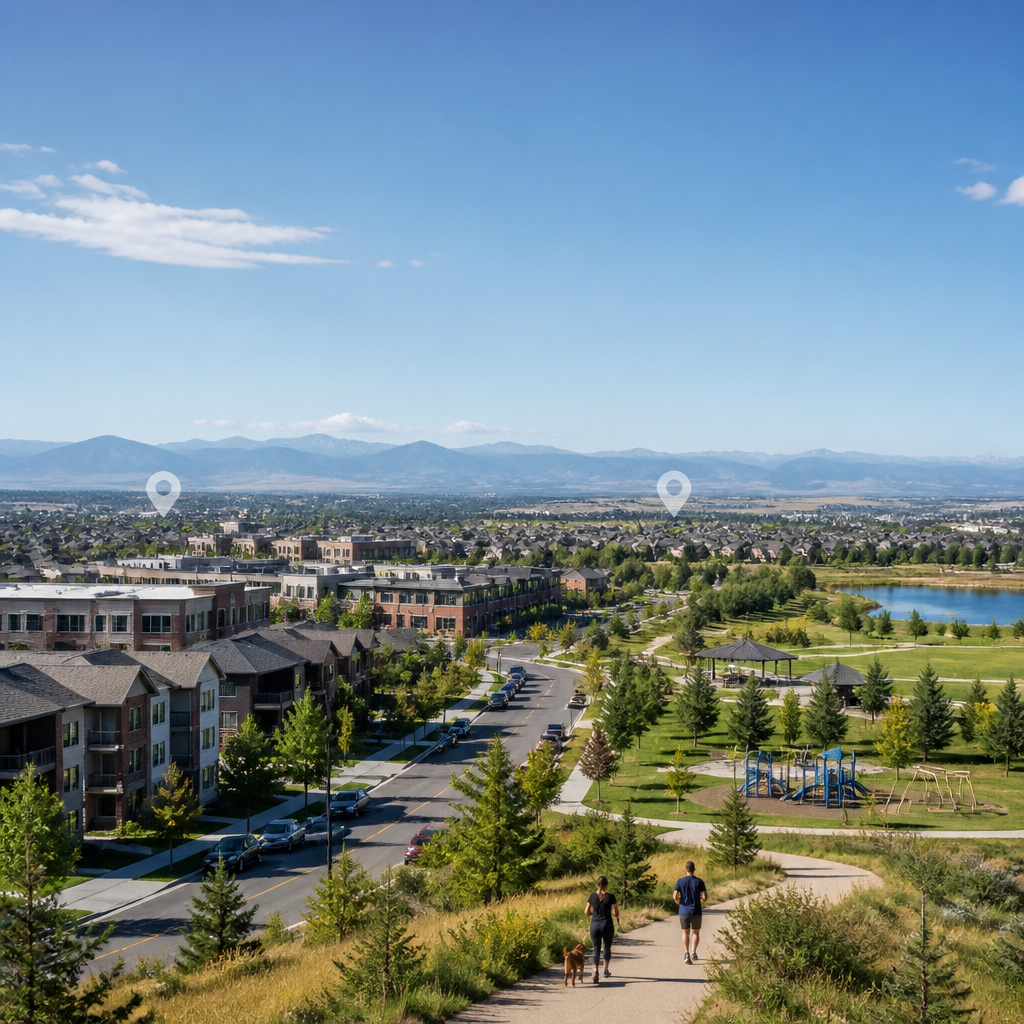
Your Ultimate Aurora CO Neighborhood Guide: Explore the Best Areas in 2026
Your Ultimate Aurora CO Neighborhood Guide: Explore the Best Areas in 2026 Aurora’s mix of master-planned communities, transit-oriented hubs, and outdoor access has turned the city into one of Colorado’s largest population centers, with roughly 399,000 residents as of 2023, according to U.S. Census